

![[Section Divider Image]](https://substackcdn.com/image/fetch/$s_!Jrro!,f_auto,q_auto:good,fl_progressive:steep/https%3A%2F%2Fsubstack-post-media.s3.amazonaws.com%2Fpublic%2Fimages%2F5f369fe4-4900-4fee-bc6c-9538ac2c1a8b_1456x75.png "[Section Divider Image]")
We are now more than three months into the largest oil supply shock in history, and the strangest thing about it is how calm the price looks. Oil has climbed from under $70 a barrel to over $90, but given that the Strait of Hormuz has been effectively closed for over ninety days, you would expect far worse. Demand is running near 105 million barrels a day against supply of about 95 million, a deficit of roughly 10 million barrels a day, and yet no violent spike. Not yet.
That gap between how bad the fundamentals are and how contained the price has stayed is the whole story, and it is the reason I recorded this update. Because the only thing standing between today’s price and a genuine spike is a set of cushions that are being drained in real time. When they run out, and I think they will, the move higher could be fast and it could be severe.
Here is the one thing I want you to sit with before we go further, because it is the tell that tells you the clock is running. The single biggest cushion holding this market together is the emergency oil that the US and other nations have been releasing from strategic reserves. That reserve is finite, it is already near its lowest level in decades, and Congress has authorized draining it much further still. The day those releases stop is the day the cushion is gone.
And that is only the first of the pressure points.
If you have not done so already, join us behind the paywall and let me walk you through why the analysts I trust think a spike is coming, what it would do to yields, stocks, and precious metals, and the one wild card almost everyone is missing that could still prevent it.
Why an oil price spike is probably coming
Let me start with the setup, because it is the frame for everything that follows.
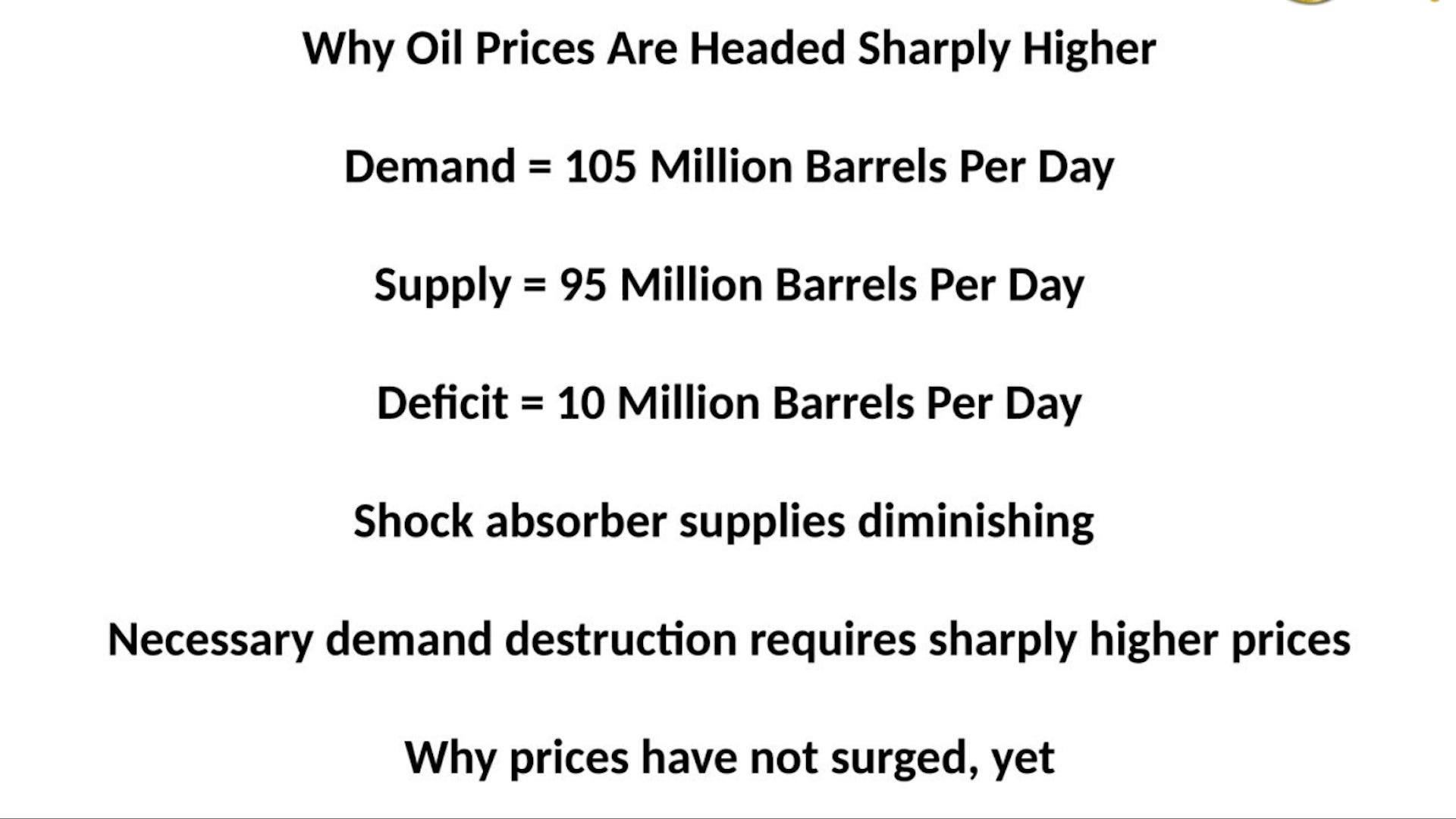
The reason prices have not surged already is that the world has been leaning on shock absorbers: strategic reserve releases, inventory draws, and lower imports masking the true tightness. But those are finite, and the analysts who study this market closely think we are approaching the point where they no longer hold.
A senior Exxon executive warned this past week that inventories are approaching unheard-of low levels, and that once you hit that point, the price shoots up. He put the spike target for physical Brent cargoes at $150 to $160 a barrel when inventories bottom. Morgan Downey, who literally wrote the book on oil, said he expects $150-plus oil over the next month or two regardless of what happens, even if there is peace tomorrow, and that the unfortunate thing about $150 oil is that it will kill the economy. And the EIA’s own outlook assumes the Strait of Hormuz stays effectively closed into the summer, with Middle East production shut-ins running above 11 million barrels a day and global inventories drawing down more than 6 million barrels a day this quarter to meet demand. Commodities are not forward-looking the way stocks are. They price the acute physical imbalance when it arrives, not before. That is why the spike, when it comes, tends to come all at once.
How the strategic reserve cushion runs down
The clearest way to see the clock running is the US Strategic Petroleum Reserve.
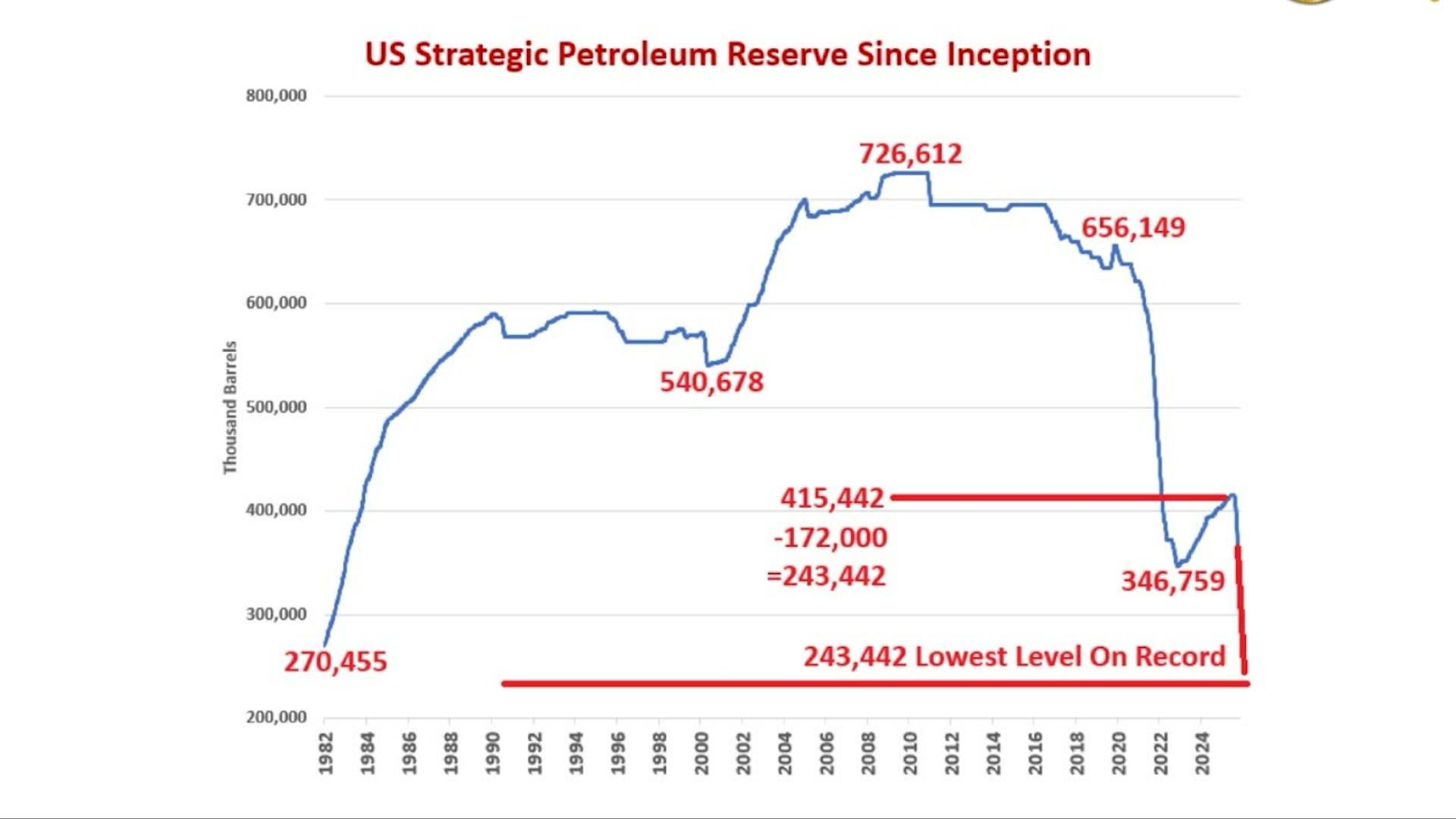
We peaked near 726 million barrels back in 2008. We are down under 350 million today, already one of the lowest levels since the early 1980s. And Congress authorized the release of as much as 172 million more barrels as part of a coordinated international effort to cushion the Hormuz shock. If the US drains that full amount, the reserve falls to around 243 million barrels, the lowest level on record.
That is the cushion. It is real, it has genuinely held the price down, and it is running out. Other nations are drawing down alongside us. The closure that these releases are offsetting, meanwhile, is looking more open-ended by the week. The President indicated the strait may not reopen until Labor Day, which means the disruption outlasts the buffers built to absorb it. That is the imbalance the analysts are pointing at.
The refining squeeze that makes gasoline the vulnerable one
There is a second pressure point most people miss, and it sits inside the refinery.
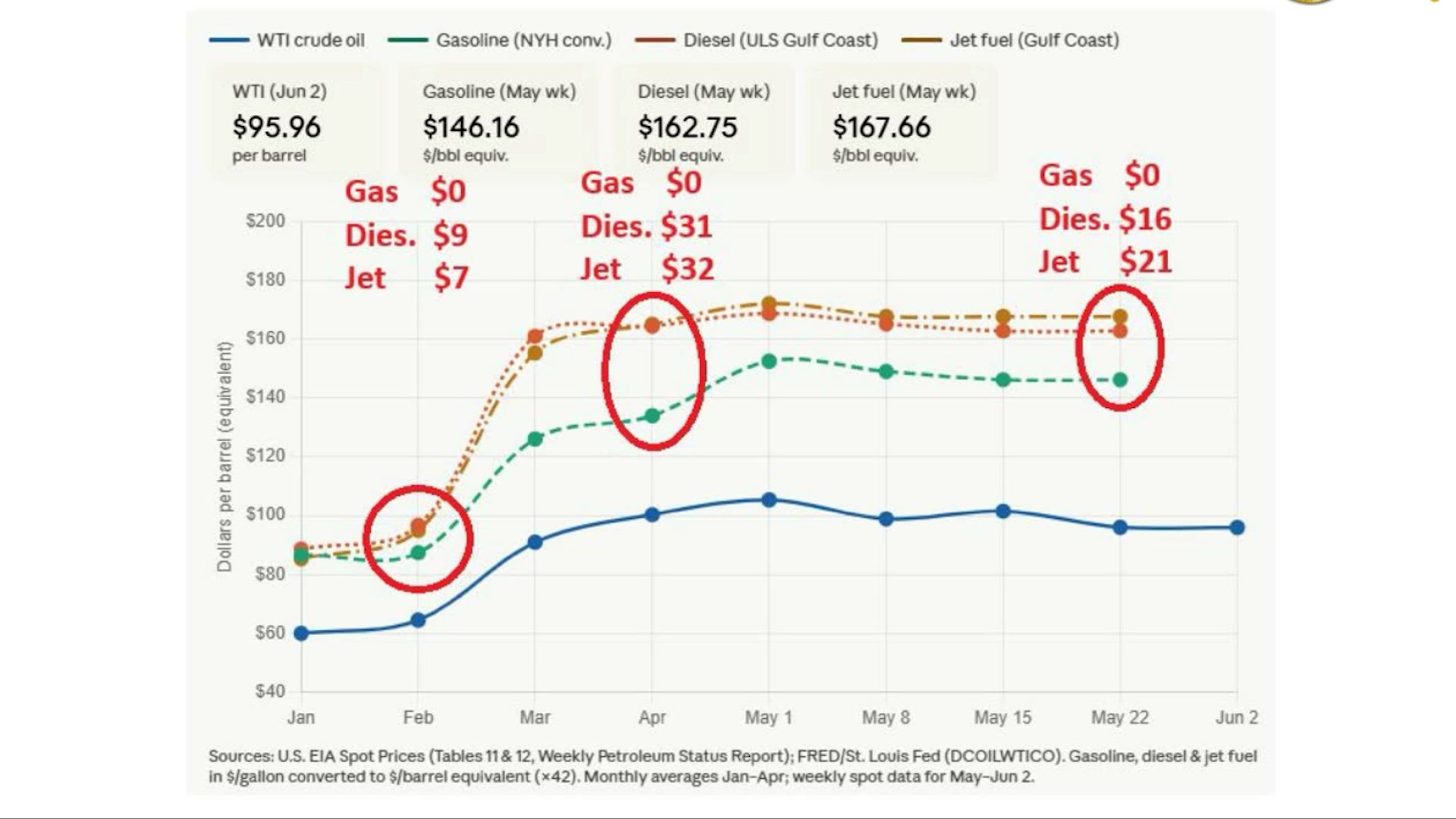
Before the war, gasoline traded roughly $9 under diesel and $7 under jet fuel, the normal premium those more-refined distillates carry. Once the crisis hit, that premium exploded, with diesel and jet running $31 to $32 over gasoline at the April peak. Refineries respond to price, so they tilted production toward the distillates that were paying them more. That is exactly why jet fuel has not shocked higher yet, but it comes at gasoline’s expense. We are producing less gasoline than we normally would, which leaves the pump price more exposed than most drivers realize, with gasoline already around $4.50 a gallon heading into the summer driving season.
The wild card almost everyone is missing: China
Here is the part of the picture that could change everything, in either direction.
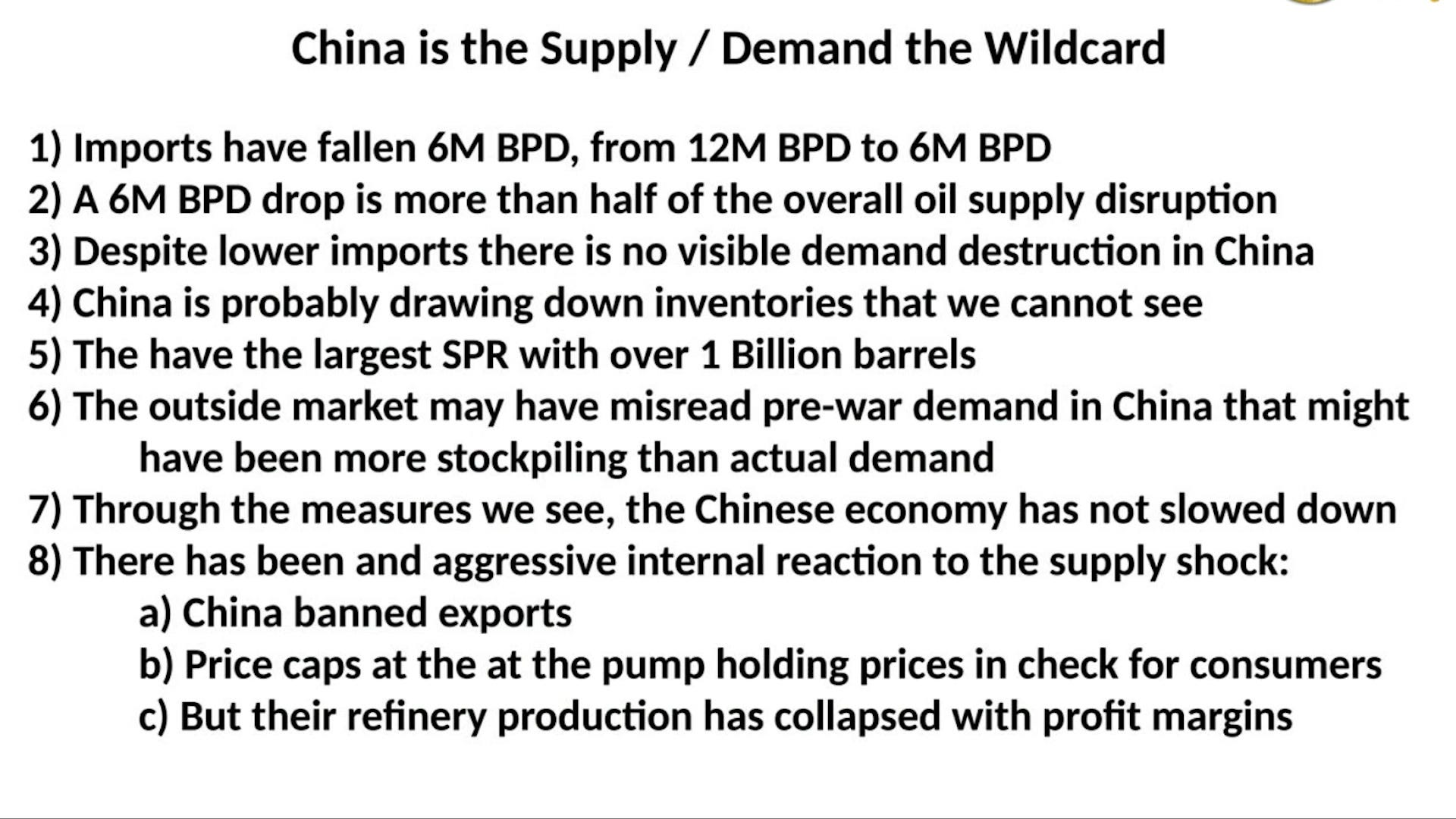
China was importing about 12 million barrels a day before the war. Since then its imports have fallen by a full 6 million barrels a day, which is more than half of the entire global supply disruption. And yet there is no visible demand destruction inside China. How? Most likely they are drawing down inventories we cannot see, from the largest strategic reserve in the world, over a billion barrels before the war began. It is also possible the market misread pre-war Chinese demand, that a chunk of it was stockpiling rather than true consumption, which is why they can throttle imports now without slowing their economy. They have banned fuel exports and capped prices at the pump, though their refinery margins have collapsed as a result. That is not sustainable forever.
This is the wild card. China is quietly buffering the entire global market by holding its imports down. The tipping point I am watching most closely is the day China starts buying again. If they step back into the market and add their demand on top of a disruption the cushions can no longer absorb, that is the setup for the spike the analysts are warning about. It could play out like last year’s silver squeeze, where the true tightness stayed hidden until it suddenly did not, and then the move came fast.
What a spike would mean for yields, stocks, and precious metals
Now to what actually matters for you, and why I am telling an oil story on a precious metals channel.
An oil price spike feeds straight into inflation expectations, and inflation expectations drive Treasury yields higher. Higher yields raise the cost of financing across the economy, which slows activity, especially anywhere that depends on borrowing. And higher yields, over these past couple of months, have been the most direct headwind for precious metals I have seen in my forty-six years in this business. When yields climb, gold and silver have been skidding, because metal pays no yield and a Treasury does. That correlation is starting to loosen a little in the last week, but the pressure is real.
The economy, for now, is holding up. The May jobs report came in strong, the third month running above 100,000 jobs. But wages are not quite keeping pace, and gasoline at $4.50 is already eating into what consumers can spend. Layer an oil spike on top of that and you have the classic recession ingredient. Since 1945 there have been twelve US recessions, and all but two had an energy supply shock as a major contributing factor.
So here is my read, and it is the reason I wanted you thinking about this now rather than reacting later. In the short run, an oil spike could pressure precious metals lower through the yield channel, the same way it has been. But in the longer run, this entire situation is deeply bullish for gold and silver. A supply shock that stokes inflation, strains the economy, and drains the government’s emergency buffers is exactly the backdrop that sends people back to real assets once the initial liquidity scramble passes.
What I am doing is stress-testing my own portfolio today for the possibility of a near-term spike, so I am prepared rather than knee-jerk reacting if it comes. And if we do get a real sell-off in precious metals on that first move, I will back the truck up, because I think the metals come out the other side of this much higher.
What I would own into it
If we get that sell-off, that is the opportunity, not the threat. For clients positioning ahead of it, this is where I favor the vintage US gold coins. An MS64 $20 Saint-Gaudens trading near the same premium as bullion eagles gives you the gold exposure now, plus real premium-expansion room over its long-run average if the metal moves the way I expect it eventually will. If we can help you get positioned in physical metal, whether bullion or numismatics, we would be honored to have that opportunity.
This is our 28th year in business, and it is the loyalty and trust our clients have placed in us that makes that possible. Without you, we would not have a business, and we are grateful for that every day.
Good luck out there.